





 MX-DREAM
  March 31, 2026
If you’ve been shopping for a folding sofa, you’ve likely seen the number "30D" or "40D" plastered across every product page. Most brands tell you that high density equals high quality. End of story.
But here’s the industry secret: Density is just a measure of weight, not a guarantee of endurance.
You can have a "high-density" foam that loses its shape in six months because it was made with cheap fillers. For a folding sofa—which acts as both a seat and a bed—density is only 25% of the equation. If you want a sofa that doesn’t turn into a pancake after a year of movie nights, you need to look at these three technical specs instead.
Folding sofas are constantly under stress. Every time you unfold it from a couch into a bed, the foam cells at the hinges are stretched and pulled.
The Myth: High density means the foam is "strong."
The Reality: If the foam has low tensile strength (measured in kPa), those repetitive folding motions will cause micro-tears in the cellular structure.
What to look for: Look for foam with a tensile strength of at least 80–100 kPa. This ensures the foam can "rebound" from the tension of being folded without the internal walls of the air bubbles snapping.
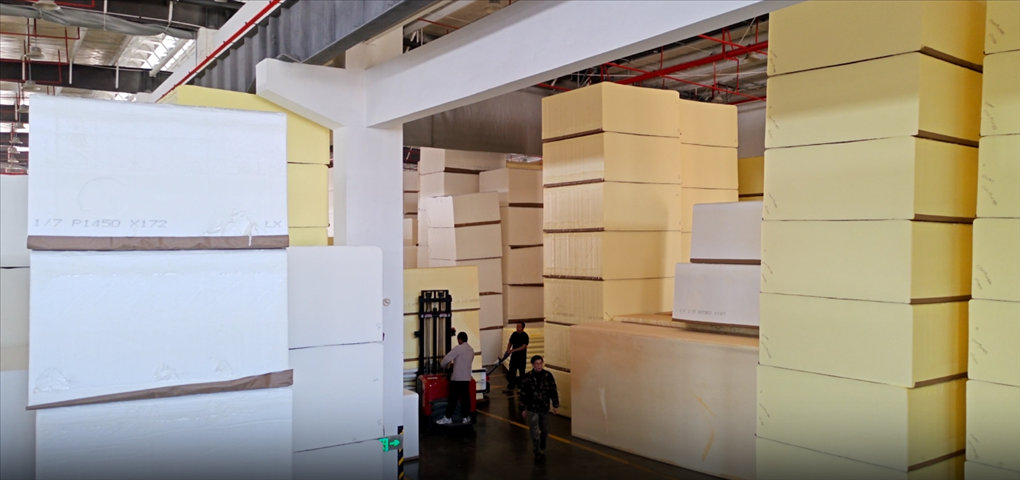
Density tells you how much the foam weighs, but ILD tells you how hard it feels and how well it supports your spine.
In the world of folding furniture, brands often use "Extra Firm" foam to hide low-quality materials. It feels great in the showroom, but "hard" doesn't mean "durable." A high-density foam with a low ILD will feel like a cloud but will bottom out (hit the floor) when you sit down.
| Usage | Recommended ILD | Why? |
| Seating | 35 – 45 | Firm enough to support body weight without sinking to the frame. |
| Sleeping | 25 – 30 | Soft enough to contour to shoulders and hips. |
The Pro Tip: The best folding sofas use Multi-Layer Construction. A high-ILD base layer for support, topped with a lower-ILD comfort layer. If a brand only lists one density number, they are likely cutting corners.
This is the most "invisible" spec, but it’s the most important for longevity. Foam is essentially a collection of millions of tiny air bubbles. How those bubbles are created determines if they will collapse.
Cheap Foam (Chemical): Uses harsh blowing agents to "puff up" the foam. These cells are often irregular and thin-walled. They feel "crunchy" over time and lose their height quickly.
Advanced MDI Foaming: This is a cleaner, more stable process. It creates a Uniform Open-Cell Structure.
Why Open-Cell Matters: When you sit down, air needs to move freely between the cells. If the cells are closed or irregular, the pressure causes them to "pop" like bubble wrap. Once the cells pop, your sofa is officially dead.
Next time you’re comparing folding sofas, don’t just ask "What’s the density?" Ask the manufacturer these three questions:
Is it "pure" foam, or are there calcium carbonate fillers? (Fillers increase density but destroy durability).
What is the Tensile Strength? (Aim for >80 kPa for folding joints).
Is it Open-Cell or Closed-Cell? (Always choose Open-Cell for breathability and bounce-back).
At MX DREAM, we don't just weigh our foam; we stress-test the cellular integrity to ensure your sofa feels the same on Day 1,000 as it did on Day 1.

May we help you?Request quote

 Thanks for Subcribing





© 2025, www.mx-dream.com All rights reserved.